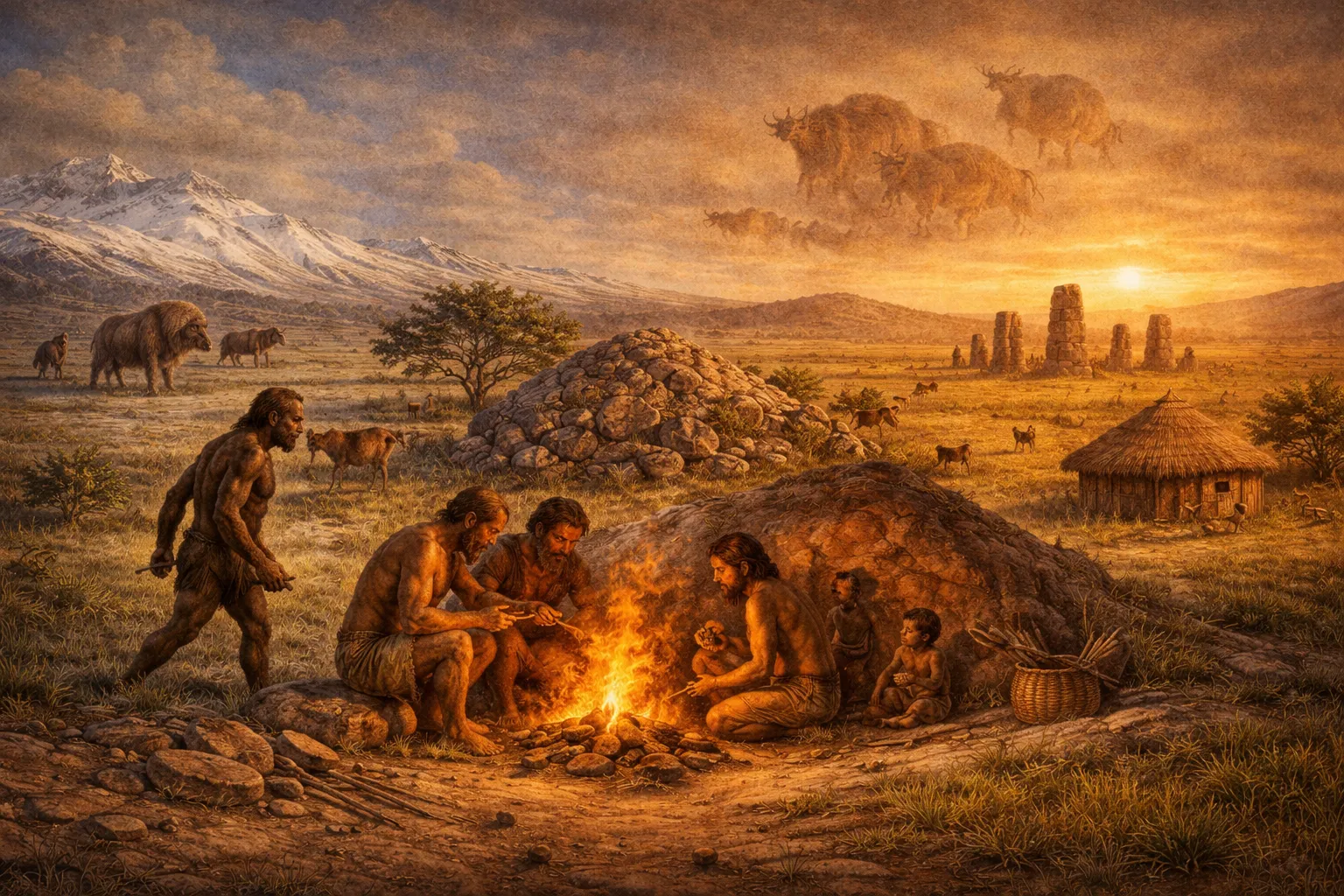
Forms of Art in Prehistory
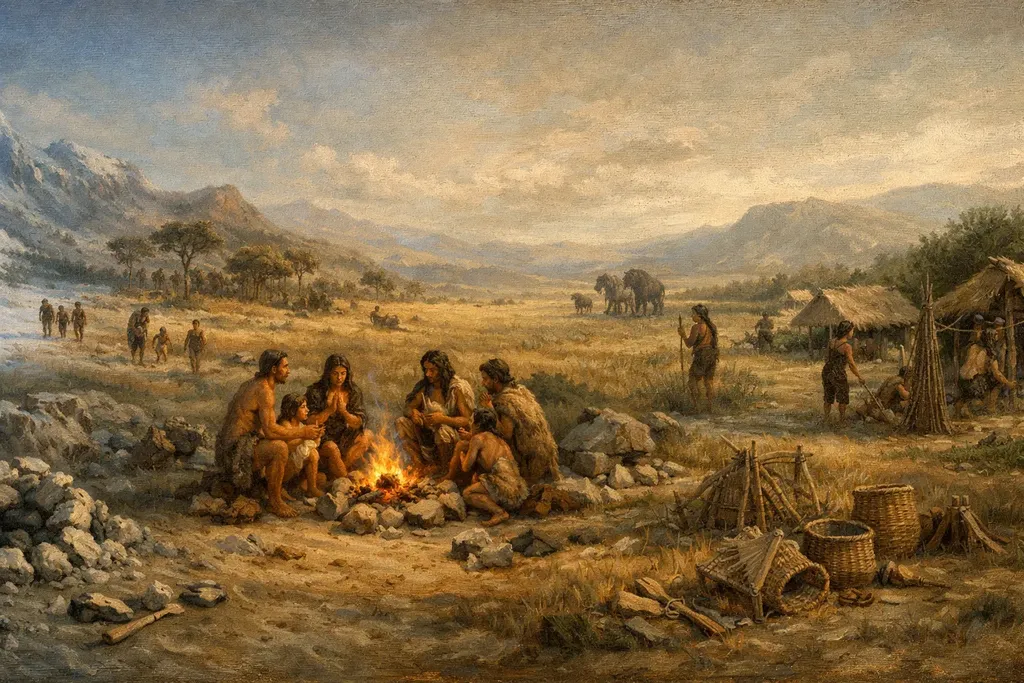
The Role of Climate
- Alternation between glacial and interglacial periods.
- Transformation of landscapes (forests, steppes, deserts).
- Constant adaptation of human populations.
Climate acts as an invisible driver, influencing migrations, resources, and ways of life.
Human Diversity
- Coexistence of multiple human species:
- Neanderthals
- Denisovans
- Homo sapiens
- Interbreeding between populations.
- Gradual disappearance of certain species.
Humanity is not a single trajectory, but a diversity of forms and experiences.
Major Migrations
- Out of Africa around 60,000 to 70,000 years ago.
- Gradual expansion toward:
- Europe
- Asia
- Oceania
- Americas
- Adaptation to diverse environments.
Humanity is fundamentally mobile, shaped by movement and exploration.
The Cognitive Revolution
- Development of complex language (hypothesis).
- Ability to imagine, narrate, and plan.
- Emergence of myths and symbolic narratives.
Humans become a narrative species, capable of transmitting abstract ideas.
Transformation of Diet
- Shift from scavenging to organized hunting.
- Importance of cooking food.
- Impact on brain development.
Diet deeply influences biological and social evolution.
Invisible Technologies
- Use of perishable materials:
- wood
- plant fibers
- textiles
- ropes
- Creation of objects not preserved archaeologically.
A large part of prehistoric knowledge has disappeared, making this period underestimated.
Deep Time
- Changes occurring over thousands or even millions of years.
- Slow and gradual transformations.
- Few abrupt breaks (except the Neolithic).
Prehistory introduces a different perception of time: slow, deep, and continuous.
Early Inequalities
- Emergence of food surplus (Neolithic).
- Development of social hierarchies.
- Differences in status and wealth.
The foundations of complex societies appear long before writing.
Synthesis
- Influence of climate and environment.
- Diversity of human species.
- Migrations on a global scale.
- Emergence of symbolic thought and language.
- Technical and social development.
Prehistory is a dynamic and complex period in which the biological, cultural, and social foundations of humanity are established.