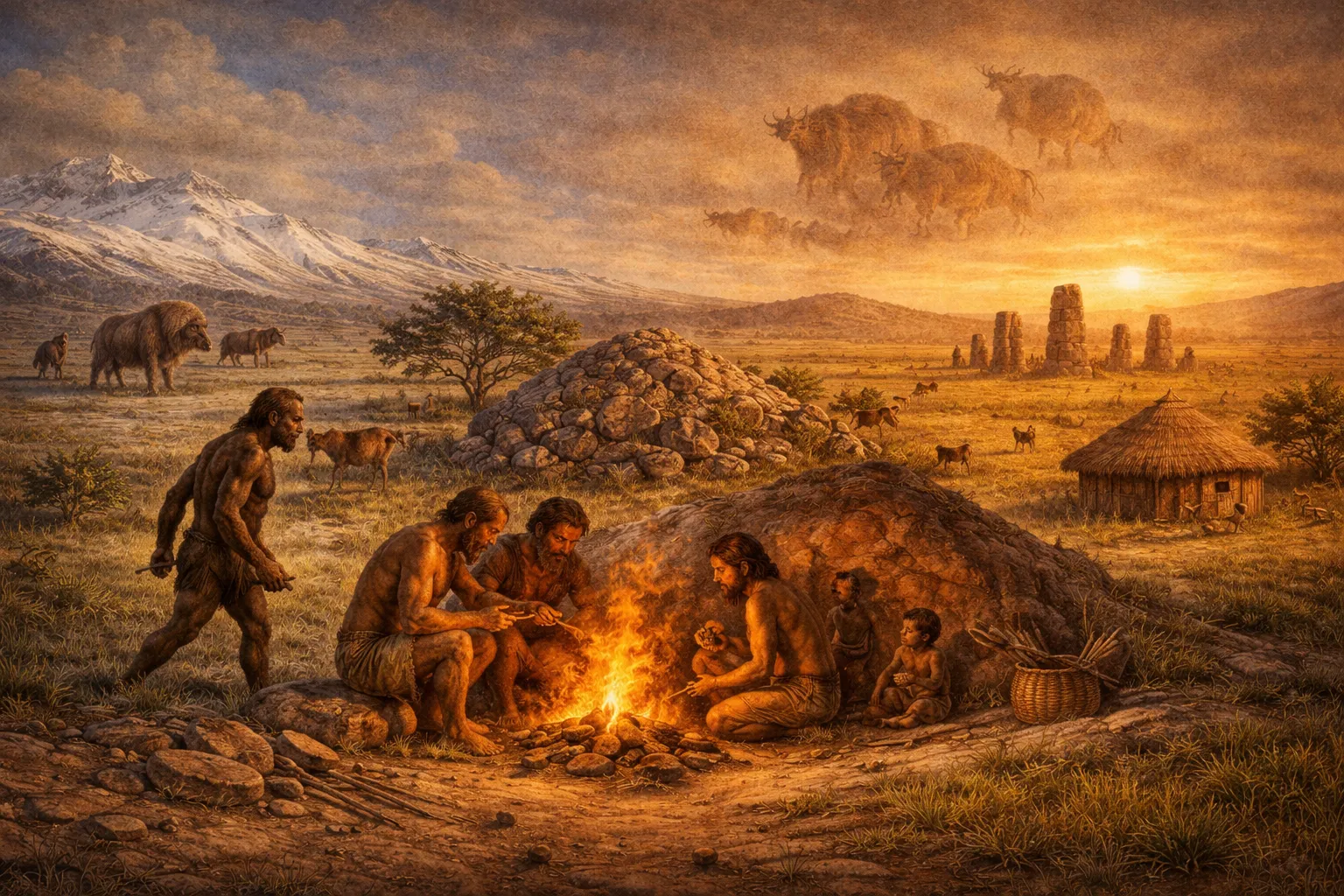
Forms of Art in Prehistory
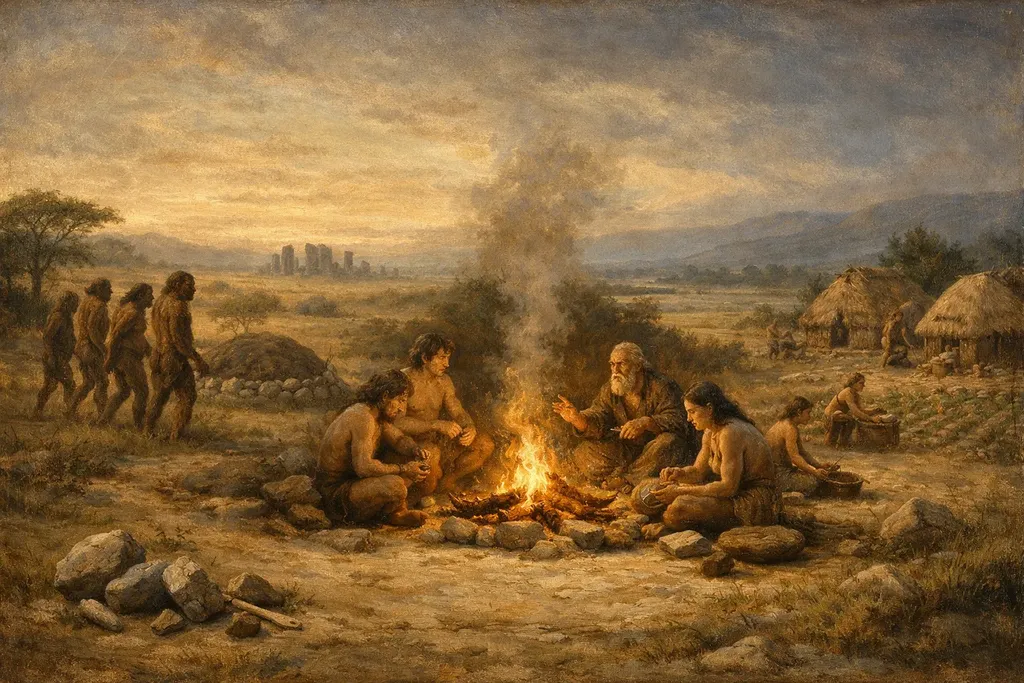
The Emergence of Humanity
- The first human species appeared in Africa several million years ago.
- Evolution was gradual and non-linear, with different species coexisting.
- Three major transformations:
- Bipedalism (freeing the hands).
- Brain development.
- Tool-making.
Humanity becomes a species capable of acting upon its environment and transmitting knowledge.
Mastery of the Environment
- Discovery and control of fire.
- Protection against cold and predators.
- Cooking food (improved nutrition).
- Migration into diverse environments (Europe, Asia, Oceania, Americas).
Humans no longer simply endure nature:
they begin to transform it.
Social Structuring
- Life in organized groups.
- Cooperation for hunting and survival.
- Transmission of knowledge between generations.
- Early forms of language (hypothesis).
Society becomes a central element of human survival and development.
Emergence of the Spiritual
- Appearance of the first burials.
- Presence of objects in graves.
- Development of symbolic and ritual practices.
- Representations linked to the invisible.
Humans develop an awareness of death and of a world beyond the visible.
The Neolithic Revolution
- Transition from hunting and gathering to agriculture.
- Domestication of plants and animals.
- Emergence of permanent villages.
- Population growth.
This is a major transformation:
humans begin to sustainably modify their environment.
The First Structures of the Future World
- Development of early forms of territorial organization.
- Emergence of social inequalities.
- Construction of monumental structures (megaliths).
- Large-scale collective organization.
The foundations of future civilizations are laid, even without writing.
Synthesis
- Transition from nature to culture.
- Transition from instinct to consciousness.
- Transition from survival to organization.
Prehistory is the moment when humanity becomes a species capable of transforming the world and representing itself.